Objective
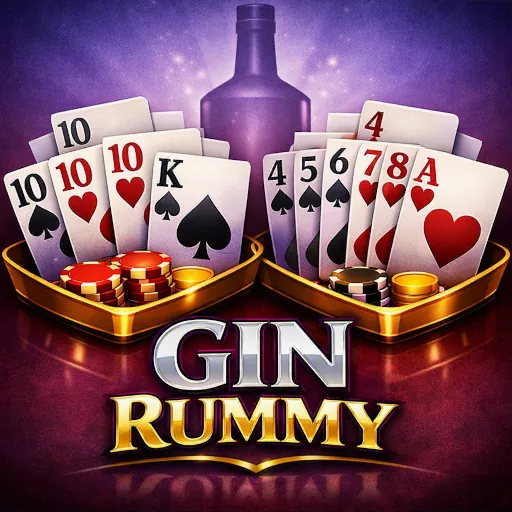
Be the first player to get rid of all your cards by forming valid melds (sets and runs) and going out.
How To Play Rummy
- Draw Phase: Click the deck or discard pile to draw a card
- Discard Phase: Form melds or add to existing melds, then discard a card
- Going Out: When you can meld all cards (and have one to discard), you win!
Valid Melds
- Sets
- 3+ cards of the same rank
- Runs
- 3+ consecutive cards of same suit
Strategy
- Watch what other players discard - don't give them cards they need!
- Keep track of which cards have been played
- Try to form multiple melds before going out
- Discard high-value cards early to reduce deadwood
Odds
A game of attrition, not arithmetic — where the winner is usually the one who finishes first, not the one who held the better cards.
What ten cards usually look like
Every hand starts with ten cards and a single upcard. The first question is always the same: did the deal give you anything to build on?
Just under 40% of ten-card deals contain a ready-made set or run. Getting two is a genuine stroke of luck — it happens only 3.4% of the time, about one hand in thirty.
| Your opening ten | Chance |
|---|---|
| At least one ready meld | 39.9% |
| Two or more melds | 3.4% |
| Nothing yet — all raw material | 60.1% |
When a meld does turn up, it's a set slightly more often than a run — about 53% sets to 43% runs, with the remaining few percent lucky enough to hold one of each.
The weight of a fresh hand
Those ten cards carry, on average, 65 points of value — and that's what you'd hand your opponent if they went out right now. In practice a deal can land anywhere from a featherweight 25 to a dangerous 98.
Why nobody ever scores big
Here's the number that explains the whole rhythm of the game. You might expect the winner to collect a fat pile of the loser's leftovers. They don't:
Because melds go face up on the table the moment they're complete, and because anyone can lay off onto any meld, both players shed cards continuously. By the time someone goes out, the loser is usually holding a scrap — a card or two. A 65-point hand melts down to about five.
Where the game is actually decided
If the cards even out and the scores are small, what's left is tempo. Three things move it:
- Going out first. The difference between winning and losing a hand is often a single turn. Every wasted draw is a turn your opponent spends emptying their hand.
- Melding early vs. holding. Tabling a meld locks in progress — but it also arms your opponent, because they can lay off onto it. A meld you put down is a meld that helps them shed too.
- Feeding the discard. The card you throw is the one thing your opponent is guaranteed to see. Throwing something that completes their run hands them a turn.
And occasionally, nothing happens
About 3% of hands end in a wash — the stock runs dry and the turns grind on with neither player able to make progress. Nobody scores, and the deal passes. It's rare enough to feel like a curiosity rather than a flaw.
How to beat the odds
- Play for speed, not for size. Since a win is worth only a handful of points, going out one turn sooner beats going out with a prettier hand.
- Dump your tens and faces early. Every face card is ten points of exposure if the hand ends abruptly; low cards cost almost nothing to hold.
- Read the discard pile. What your opponent takes tells you what they're collecting — and what they refuse tells you what's safe to throw.
- Expect 60% of hands to start with nothing. A meldless opening is the normal case, not bad luck. Build toward two near-runs and let the draws decide which one lands.
Opening-hand figures come from 200,000 fresh deals of this game's own deck and meld-detection code. The hand-length, scoring and wash figures come from running full matches to 100 with the game's engine driving both seats. Those match figures describe how the game behaves — the pace, the typical score, the number of hands — rather than predicting any particular player's win rate, since a thinking human reads the discard pile in ways a rule-based opponent does not.