This is a Cheery Chimp original.
Objective
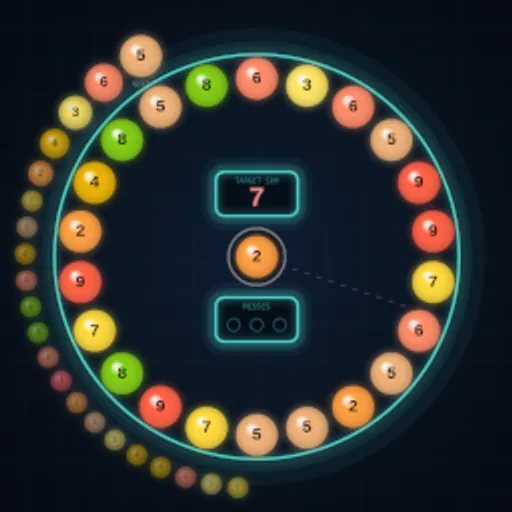
Merge like-numbered balls until you reach 2048.
Controls
Tap or click and hold to aim around the sun. Release to fire.

This is a Cheery Chimp original.
Merge like-numbered balls until you reach 2048.
Tap or click and hold to aim around the sun. Release to fire.

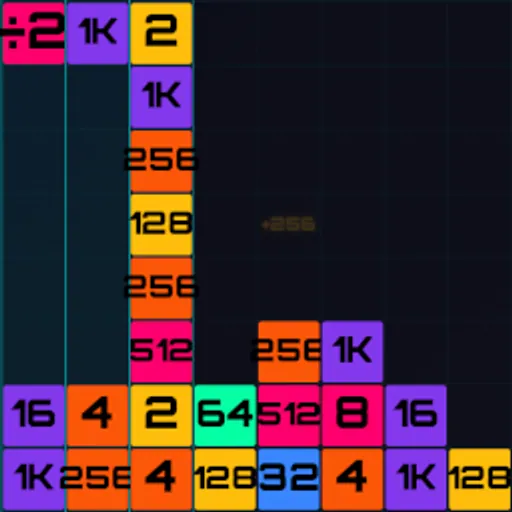

The 2048 puzzle game was created in 2014 by Gabriele Cirulli, a 19-year-old Italian developer. He built the game as a weekend project inspired by earlier number-merging games such as 1024! and Threes!. The objective was simple: slide numbered tiles across a grid, combining matching values until reaching the 2048 tile.
Because Cirulli released the game free and open-source on the web, it spread rapidly through social media and word of mouth. Millions of people played it within weeks, and countless variations soon appeared, featuring different board sizes, themes, and gameplay mechanics.
Today, 2048 is considered one of the most influential casual puzzle games ever made. Its simple rules, strategic depth, and accessibility helped inspire an entire genre of merge-style and number-combination games that remain popular on mobile devices and websites around the world.
Turn gravity through ninety degrees and it stops being a force and starts being a design problem. Almost nothing in the genre survived the rotation.
Orbit 2048 is a merge puzzle of the kind where you drop things into a container and matching pairs fuse into the next thing up. Usually the things are fruit. Here they are numbers, from 2 up to 2048, and the container is not a container at all — there is a sun in the middle, gravity points inward from every direction, and the launcher circles the rim.
That single change — gravity pointing at a spot rather than downward — sounded like a reskin when I started. It is not. It removes the floor, the ceiling, the walls and the losing condition, and each of those has to be reinvented from scratch.
The easy decision first, and it is not really about gravity at all.
Merge games have a tier ladder, and in most of them the ladder is arbitrary. Is a persimmon above or below a peach? There is no way to know except by playing until you have memorised it, and until you have, every merge is a small surprise instead of a plan. The genre papers over this with size — bigger fruit is further up the ladder — which works until two adjacent tiers are nearly the same size.
Numbers carry their own ordering. You do not have to be taught that two 4s make an 8, and you can see at a glance which of two balls is worth more without comparing their diameters. It also means the doubling ladder is doing double duty: it is the tier list and the score, so there is nothing extra to explain.
The obvious way to build orbital gravity is the way the universe does it: force falling off with the square of the distance. I tried it for about an hour.
Real gravity produces two things that ruin a casual puzzle. Far from the sun the pull is almost nothing, so a ball fired outward drifts, slows, and hangs around in a dead zone where nothing interesting happens and the player is just waiting. Close to it the pull is enormous, so balls whip around the centre at speeds that make merges chaotic rather than satisfying. In between, you get genuine orbital mechanics — slingshots, eccentric paths, the whole business — which is wonderful in a space game and completely illegible in a game where you are trying to plan where a ball will come to rest.
The pull here is constant in magnitude and always points at the centre. It is wrong as physics and right as a game: a ball fired at the sun behaves the same way from anywhere on the rim, which is the only reason you can aim at all. Predictability is the feature. The orbital look is a skin over something much more obedient.
This is the part that took the longest to solve, and the reason is that the failure condition in a drop-merge game is load-bearing and nobody notices.
Those games end when the pile grows past a line near the top. That works because gravity has a direction, so "full" has a location. Stack up enough and you cross the line. Take the direction away and the pile is a disc that grows outward in every direction at once. There is no top to cross. The first playable build could not be lost at all — it just got denser and denser until the whole screen was a solid wheel of numbers and nothing could move.
The answer came from looking at what the player actually needs rather than what the pile is doing. You need somewhere to fire from. The launcher travels around the rim, and as the disc grows it starts pressing outward against that path. The game is over when the orbit is completely blocked — when there is no angle left anywhere on the circle with a clear shot.
That turned out to be better than a line, because it is gradual and local. You do not lose all at once; you lose one sector at a time, and you can watch it happen. Blocked arcs are drawn in red on the rim, so the warning is not a meter or a number but the shape of the space you have left. Late in a run the rim is mostly red and you are shuttling between two surviving gaps, which is a kind of tension a horizontal line cannot produce.
The aim preview is a dotted line showing where the shot will go, and in a normal gravity field you can draw one with a bit of school maths. Under radial gravity the path is not a parabola, or an ellipse, or anything with a tidy closed form — especially once a ball is going to graze the accumulated pile on the way in.
So the preview is not drawn, it is simulated. It steps the same integration the physics engine uses, with the same forces and the same timestep, and plots where the ball actually goes. The preview and the shot agree because they are the same computation run twice.
Getting that identical rather than approximately similar mattered more than I expected. A preview that is mostly right is worse than no preview at all: it teaches you to trust it, and then it lies to you on the shot that mattered. Players forgive a game with no aiming aid. They do not forgive one that pointed at the wrong place.
Merges cascade — a pair fusing often lands a new ball against its own match, which fuses again, and so on. Detecting that chain and multiplying the score for it costs very little and changes the whole feel of a good shot: the difference between a move that worked and a move that kept working.
The sound is synthesised in the browser rather than loaded, so there are no audio files to download, and every merge tier gets its own pitch — the ladder is audible as well as visible, and a long cascade plays as a rising run of notes.
On a phone there is a short buzz on each merge through the vibration API. It is the cheapest piece of feedback in the game and one of the most effective, because it confirms the merge in a channel that is not already busy looking at the screen.
This one is built differently from the rest of my games: a single HTML file, with the physics engine pulled from a CDN, and no build step at all. It was an experiment in how far that goes.
Further than I expected, is the answer. There is something clarifying about a game you can open in an editor in its entirety, and the absence of a build meant the loop between changing a number and feeling the change was about as short as it can get — which matters a lot when what you are tuning is how something feels to fire.
The cost shows up at the edges. There are no unit tests, because there is nothing to import. I cannot run a solver over it the way I do with games that have a headless core, so every tuning decision was made by playing rather than measuring. For a physics toy with no levels to verify, that trade was worth making. For a puzzle game with a par to hit, it would not have been.
The one thing the file does not own is the mute button. It sits in the site's own header, and the game listens for it — which is the right split, and the reason you get one mute control on this site instead of a different one in the corner of every game.