You are not spelling words. You are cutting holes in a ceiling, and the words are just the tool
you have been given to cut them with.
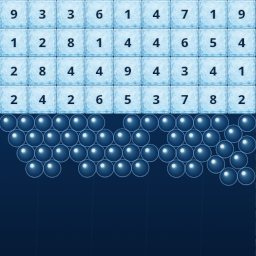
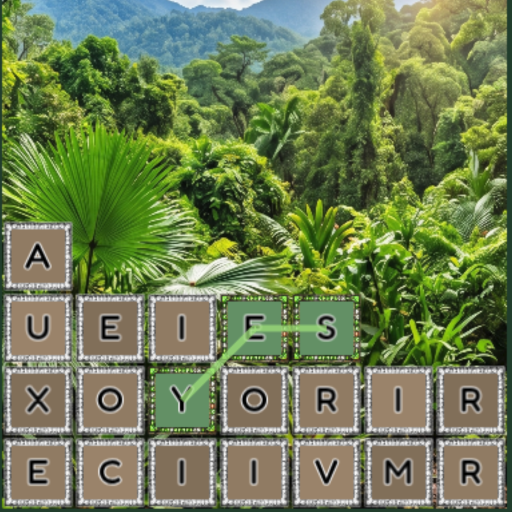
Bubble Saver is a sheet of ice made of lettered tiles, with water below it and air above. Bubbles rise out of the
water and cannot get through the ice. You trace a path across adjacent letters to spell a word, the tiles you used
melt away, and the gap they leave is a way out.
That is the whole design, and it is worth saying clearly because it is the thing that makes the game more than a word
search: the word is not the goal. Spelling a long clever word in the wrong place is worth nothing,
because the hole it makes is nowhere near where the bubbles are. Spelling a scrappy three-letter word directly above
a bubble that has been bumping along the underside of the ice for ten seconds is a good move. The vocabulary is the
verb; the geometry is the objective.
Bubbles that have to be a bit clever
All of which puts a surprising amount of weight on the bubbles. If they simply rose in a straight line, the game
would be a shooting gallery — make a hole in the exact column a bubble happens to be in, or waste the word.
That is too demanding and not very interesting.
So the bubbles look for the way out. Each one keeps a target column and re-evaluates every so often — not every
frame, and not on a fixed schedule either, but after a randomised interval, which is what stops a screenful of them
moving in visible lockstep. It checks whether the ice directly above is blocking it, and if so it scans left and
right for the nearest open column and drifts that way.
The force pushing it sideways is deliberately gentle, with a little random jitter mixed in. A bubble that snapped
instantly to the correct column would look like a cursor; one that drifts, overshoots slightly and wanders looks
like a bubble. The jitter also stops them stacking into a perfect queue at the same gap, which would be both
unrealistic and much less pleasant to watch.
Nearest is not the same as reachable
Then came the failure that taught me the most, and it only showed up once the ice was well chewed.
Early in a level, with few gaps, everything worked. Later, with holes everywhere, bubbles would wedge themselves into
corners and sit there jostling against solid ice, apparently determined to get somewhere they could not go. More
freedom made them worse, which is always a sign that the logic is wrong rather than just undertuned.
The cause was one missing question. A bubble picked whichever gap column was numerically closest — and never
asked whether it could actually get there. With solid ice between it and that gap, it would steer toward it, rise,
hit the underside, and stay stuck against the barrier, nudging at it, because as far as it was concerned the exit
was six columns to the left and it was heading there.
The fix came in three parts, and the first is the one I should have had from the start.
A bubble can only enter the ice from below. It cannot slide into a gap sideways. So when a bubble is
still in the water it should only consider gaps in the bottom row — not any hole anywhere in the
sheet. Half the bad behaviour was bubbles aiming at openings two rows up that they were never going to reach from
where they were.
Prefer a gap you have a corridor to. Rather than just measuring distance, check whether the columns
between the bubble and the gap are also open along that bottom row. A gap three columns away with clear
water in between is a better destination than one two columns away behind a wall. That turns a nearest-neighbour
choice into something closer to an actual path check, which is what it should have been all along.
Push harder when pinned. A bubble pressed directly against the underside of a solid block gets a
stronger lateral shove, so it slides out from under it rather than grinding upward against something that is never
going to move.
The broader lesson is one I keep relearning in different clothes: distance is easy to compute and is not the thing
you actually want to know. Anything navigating a space with obstacles needs to be asked whether it can get there,
not just how far away it is. A bubble is the least intelligent object in the game and it still needed a real answer
to that question.
Making the ice readable
A few things exist purely so the player can tell what is going on.
The path you are tracing shows its state as you build it — whether what you have so far is a real word, whether
it is long enough, whether adding one more tile is even legal. That matters more here than in a plain word game,
because you are not only thinking about the word. You are thinking about the word and the shape of the hole
it will leave, and if you also have to wonder whether the word counts, that is one thing too many.
The ice advances downward over time, which is the pressure that makes it a game rather than a toy: the sheet creeps
toward the water and the run ends when it gets there. Clearing tiles pushes back against that. So a good word is not
just a hole in a useful place, it is also time bought, and the two are not always the same choice.
What it is really about
Most word games ask a single question: what words can you see? This one asks that and then asks a second, harder one
on top — of the words you can see, which one is in the right place?
Those two questions pull against each other constantly. The best word on the board is regularly the wrong move, and
noticing that a modest word is better positioned than a magnificent one is the skill the game is actually testing.
It is also, I think, why the bubbles had to be reasonably smart: every bit of slack they have in finding their own
way out is slack the player gets in choosing where to cut.